AI Sat Mini Visualization
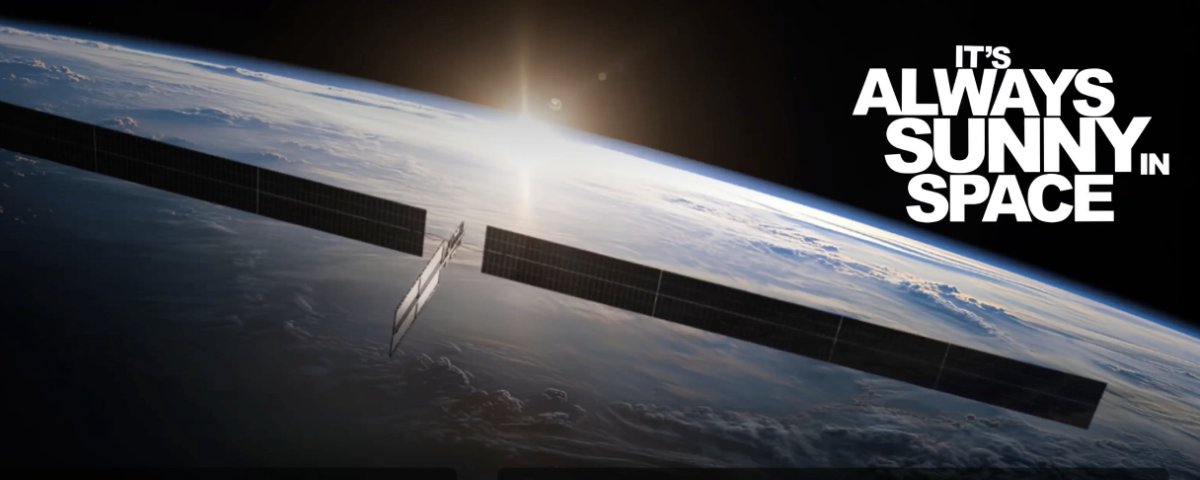
Elon Musk’s Terafab talk introduced the AI SAT MINI, a project aimed at massive off-planet compute. But how does it actually behave in space? What’s the satellite layout, and what about the orbit?
I’m not an expert; I’ve just played a lot of Kerbal Space Program. When I saw that “hero shot,” it looked off. How is a satellite built for unfiltered light looking directly at a sunrise? If the goal is 24/7 solar power, you shouldn’t be staring at the horizon.
I ended up in a rabbit hole and built a 3D visualization and a site to see how the layout and the orbit actually work. As one does.
Try it here: nmanzini.github.io/ai-sat-mini/
You can jump straight into the simulation at the link above or follow along with my breakdown below. Let’s go.
The Idea Behind it Ai Sat Mini.
The satellite is in space to enable massive AI computing. I won’t go into the depth of the “Kardashev Type II” plan, but compute needs massive energy. This satellite needs to be in constant view of the sun (luckily, it’s always sunny in space), and it needs to stay close enough to Earth for low-latency communication and orbital placement.
The Orbit
The ai satellite will use a Dawn-Dusk Sun-Synchronous Orbit (SSO). It is a specialized near-polar orbit where a satellite travels along the terminator, the dividing line between day and night.
This orbit is meant to always see the sun and never be in the shadow of planet earth. So it is always sunny in a Dawn-Dusk SSO.
But how high the satellite will orbit? This is really important and let me explain a few things first:
An orbit closer to earth
- Will be likely need less energy from the rocket (due it to be closer to the surface orbit).
- Will be able to communicate with earth quicker (if there are enough base stations in sight).
- Will suffer a drag from the atmosphere. This drag will make the orbit hard to maintain, the satellite will slowly decay into a tighter orbit faster and faster if it is not capable of propulsion (practically speeding up).
A wider Orbit
- Will require more energy for the rocket to reach there (Delta-v change in velocity).
- Will have longer delays in communication with.
- Will suffer substantially less drag.
Stralinks have a relatively low orbit at around 550 Km. But they require to be closer to Earth’s surface to reduce communication delay. It is their main purpose. Starlinks are also much smaller satellite compared to Ai Sat Mini and this is a big factor on the drag forces.
After some research I read that Ai Sat Mini will orbit at a wider orbit than starlink between 500 and 2000 km.
Orbit periods
The orbital period for a circular orbit around Earth is approximately
- 94.5 minutes at 500 km
- 105.0 minutes at 1000 km
- 127.0 minutes at 2000 km
The orbital period for a circular orbit is calculated using the formula derived from Kepler’s Third Law.
The Satellite
The satellite has 3 major functions (each done by a specific part):
- Compute (core)
- Collect energy (solar panel)
- Dissipate heat (radiators)
When fully deployed, the satellite is over 170 meters long. Each unit weighs approximately 1 ton.
- Each unit is designed to provide 100kW of power. and this is just the “mini” version. Future full-scale versions are expected to reach the Megawatt.
- Features a 100-square-meter radiator to reject heat from the AI processors into the vacuum of space.
- Utilizes specialized D3 chips optimized for high-temperature space environments and radiation resistance.
Dissipating heat is the real challenge. In a vacuum, there is no conduction or convection; you only have radiation. You have to emit energy into the void while trying not to absorb it from the sun or Earth. This requires radiators to stay perpendicular to heat sources.
On the other side the good news is that energy is plenty and it is always sunny so solar panel can be multiple time more effective in space than on earth. There is no air filtering the light, the solar panel require less layers, and it is always sunny!
- Maximise solar surface to the sun for max energy
- Minimize the surface of radiators towards the sun and planet earth
So how does it keep aligned? I am not sure of this. Does the core and radiator rotate to keep perpendicular to earth and the solar panel stay fixed? I think the whole frame is rigid and the entire satellite rotates. And this is how my visualization works.
Sunset Shot
After looking at the mechanics, it’s clear the satellite should almost never see the sun on the Earth’s horizon during operational use. The whole point of being in space is that the atmosphere isn’t there to filter the light.
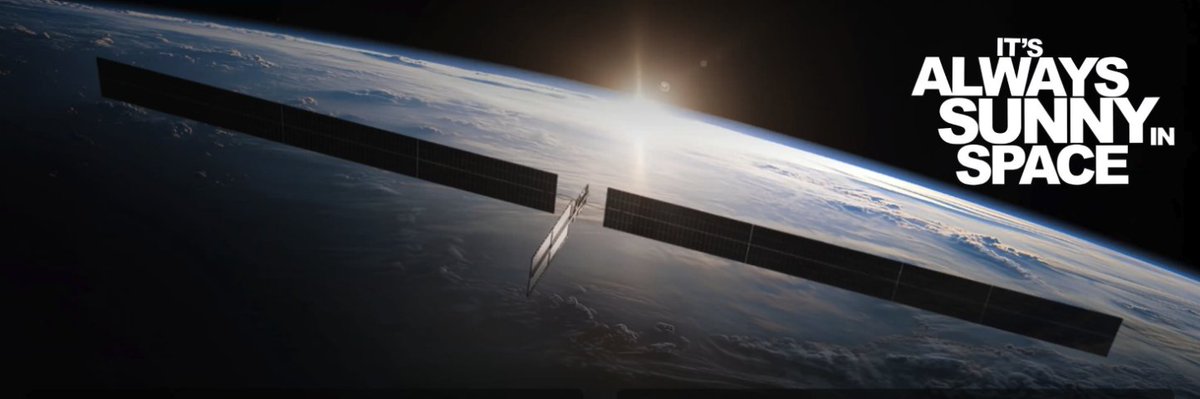
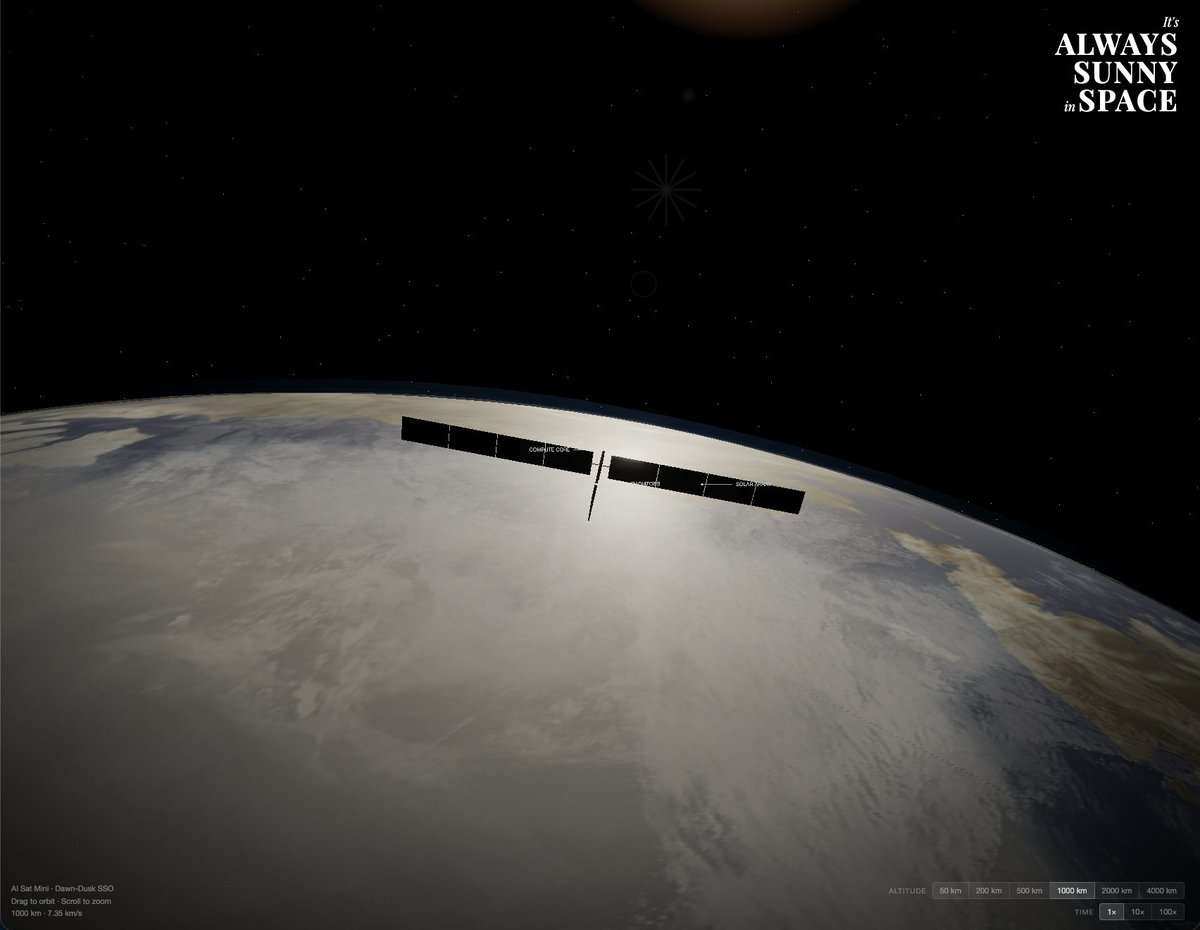
So let’s see how does the satellite look like:
- From 1000 km (more likely the sat orbit) you cant really see the sun when looking at the horizon.
- From 500 km (Starlink) you start to see it.
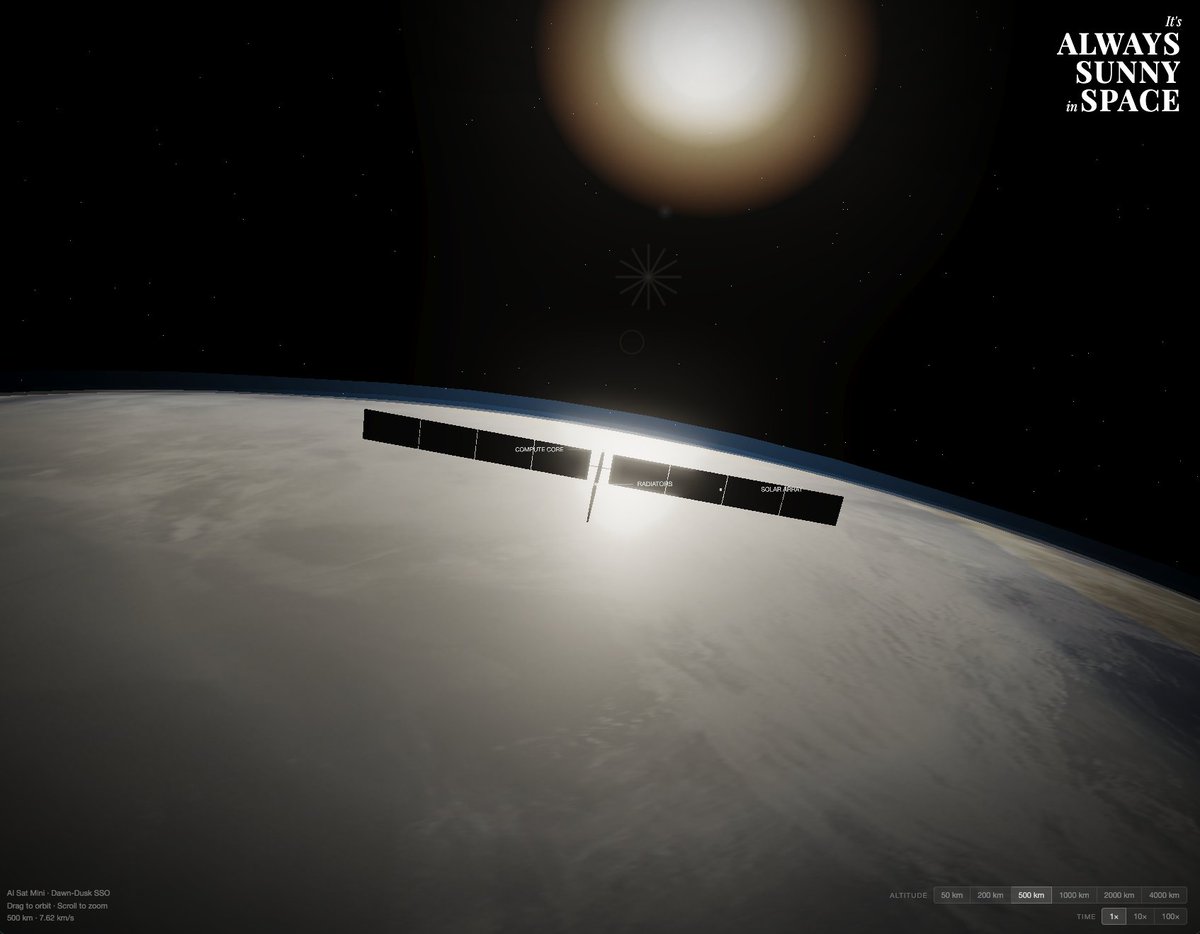
To recreate the “sunset” look from the presentation in a Dawn-Dusk SSO, you’d have to drop to an orbit of 50 km. That’s lower than an X-15 flight. There is way too much air there for a satellite to survive; it would burn up immediately.
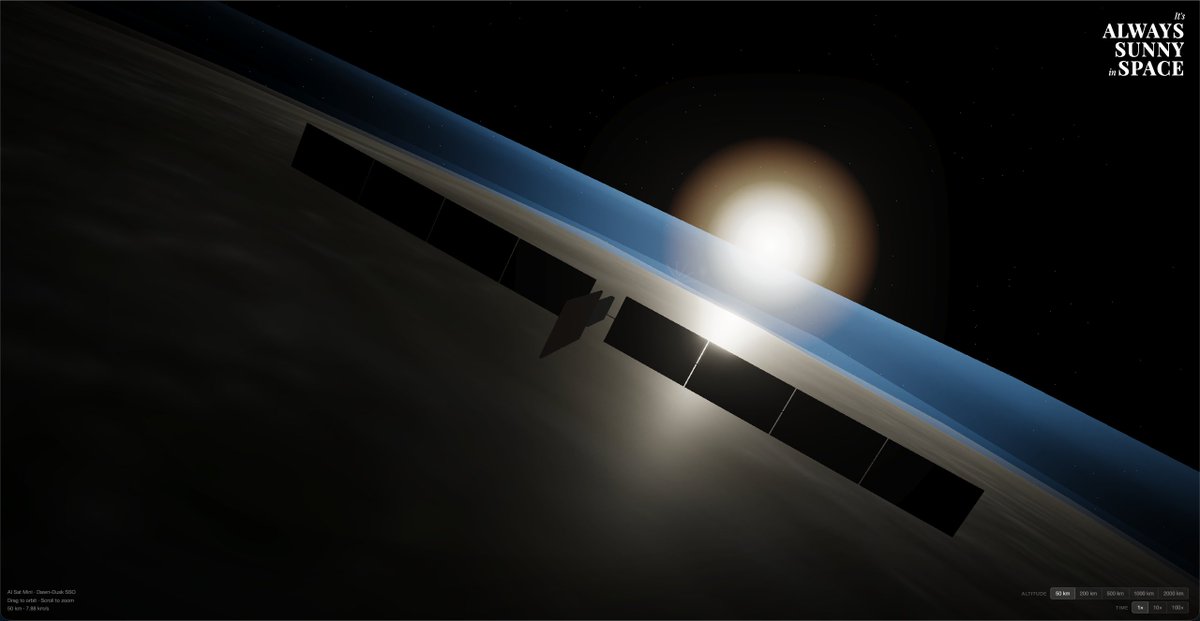
That shot was clearly done for the “wow” effect, not the physics. BTW it worked.
Conclusion
The AI SAT MINI is an incredible project, and the Terafab infrastructure needed to build it is even more so.
If you haven’t checked out the visualization yet, go to nmanzini.github.io/ai-sat-mini/ and try it yourself.
I’m currently debating if I should work on a Kardashev Type II scale videogame. If that’s something you’d be interested in, reach out or leave a comment.
